

WHO WE ARE

The Coastal Cities At Risk Philippines (CCARPH) Consortium is composed of the Ateneo de Manila University, Manila Observatory, and the National Resilience Council.
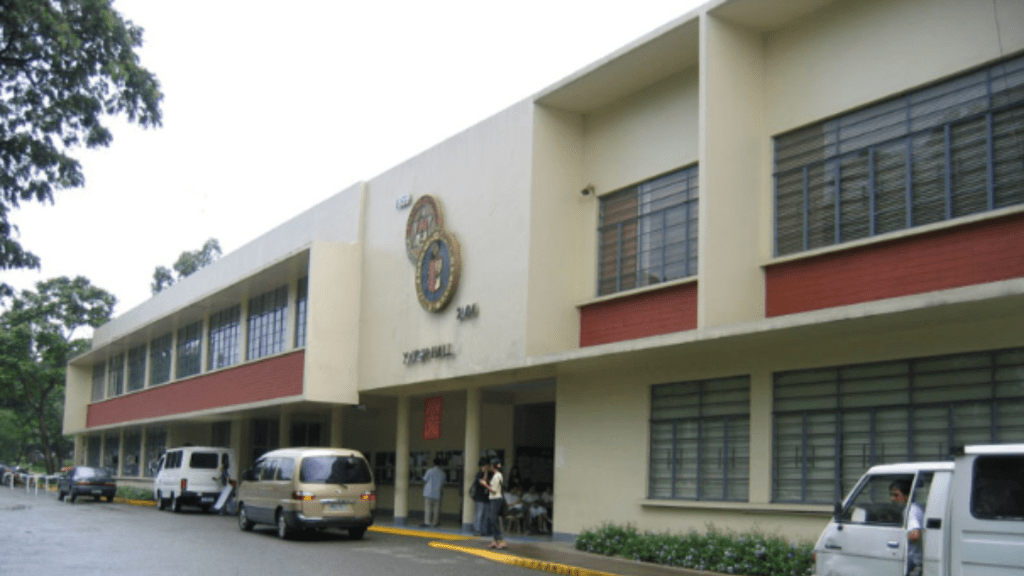
The Ateneo de Manila University (ADMU) is a private research university in Metro Manila, Philippines. Founded by the Society of Jesus in 1859, Ateneo is the third-oldest university in the Philippines. Its undergraduate and graduate programs are co-educational and organized into four schools, collectively known as the Loyola Schools, located at its main campus at Loyola Heights. Four professional schools (law, medicine, business, government) occupy campuses in different parts of Metro Manila. The Commission on Higher Education (CHED) has recognized its units in biology, physics, chemistry, mathematics, information technology, entrepreneurship education, English literature, philosophy, sociology, psychology, and business administration as Centers of Excellence, while the communication, electronics engineering, environmental science, history, Filipino literature, and political science units have been declared as Centers of Development.
The Loyola Heights campus also hosts these research centers: Philippine Institute of Pure and Applied Chemistry (PIPAC) and National Chemistry Instrumentation Center (NCIC), Ateneo Research Institute for Science and Engineering (ARISE), Ateneo Innovation Center (AIC), Ateneo Center for Economic Research and Development (ACERD), Anthropological and Sociological Initiative in Ateneo (ASIA), Global and Area Studies Hub, and the Institute of Philippine Culture (IPC).
In 2021, ADMU ranked the highest among Philippine universities in the Times Higher Education (THE) University Ranking for SDGs Implementation. Also in 2021, the France-based Eduniversal ranked the university’s Master of Disaster Risk and Resilience (MDRR) as one of the best master’s programs in Far East Asia.
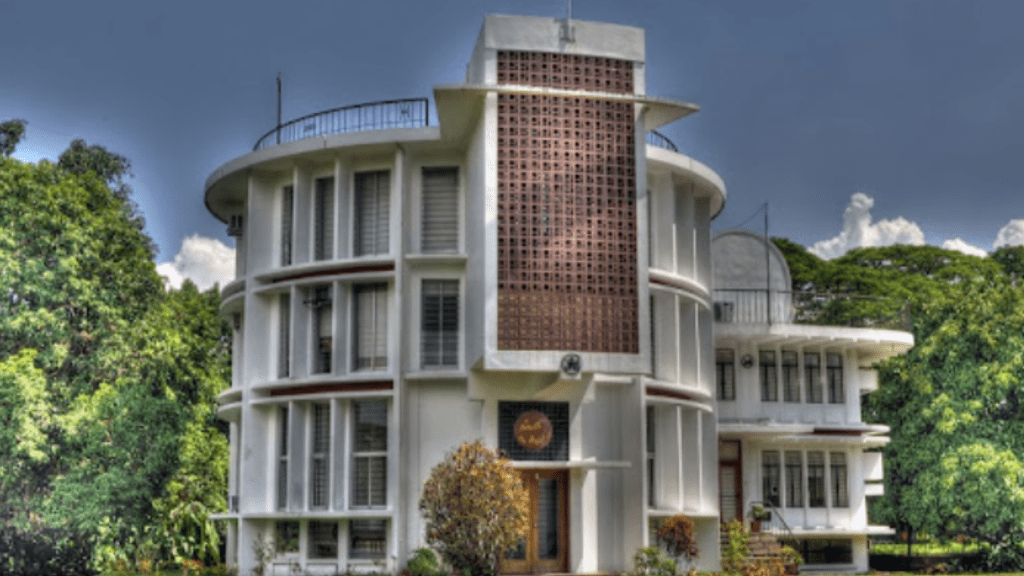
The Manila Observatory (MO), a private non-stock, non-profit research institution serving the science apostolate of the Society of Jesus in the Philippines, was established in 1865 in Manila. Inspired by Ignatian spirituality, the MO is committed to a scientific culture for sustainable development of the Philippines in its regional and global context through research excellence in environmental and pre-disaster science, particularly in the areas of atmospheric studies, solid earth dynamics, and instrumentation. It is dedicated to: (1) conduct continuing scientific research, (2) form future scientists, (3) network with allied groups, (4) engage in information, education, communication efforts, (5) collect and manage special research materials, (6) build the capability of institution and local communities, focusing on the urban environment, and (7) advocate key policies needing scientific inputs.
MO scientists have always been key players in the Intergovernmental Panel of Climate Change (IPCC), with the Sixth Assessment Report (AR6) having four CCARPH-MO climate scientists: Drs. Gemma Narisma, Faye Cruz, Laurice Jamero, and Rosa Perez.
The National Resilience Council (NRC) is a science- and technology-based public-private partnership that was organized in 2017 after a series of dialogues, conferences, and consultations that began after Super Typhoon Haiyan. It was convened by the Carlos P. Romulo Foundation to bring together leaders in the national and local government, private sector, the scientific community, and civil society. These efforts were led by former Philippine Foreign Affairs Secretary Roberto R. Romulo who was joined by Mr. Hans T. Sy, then serving on the global board of the UNISDR Alliance for Disaster Resilient Societies (ARISE).
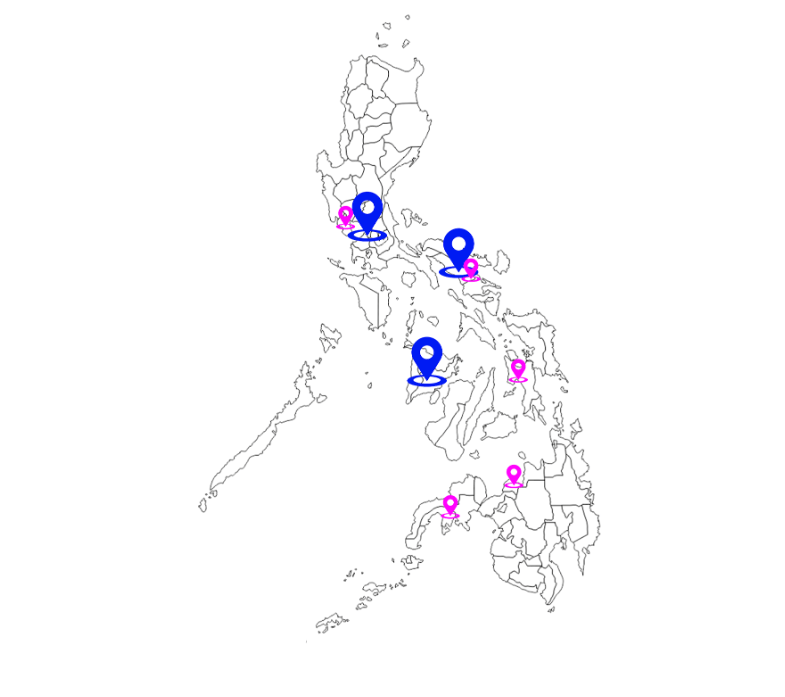
The NRC is co-chaired by Mr. Sy and the Secretary of National Defense Delfin Lorenzana. In recognition of the complexities involved in understanding risk and moving science to action, it has vice-chairs for national and local government, business, academia, and civil society organizations. The council works primarily to enhance evidence-informed risk governance in local governments through multi-stakeholder partnerships and support for transdisciplinary action research. It works in nine local government units, three of which are CCARPH partners, namely: Muntinlupa, Naga, and Iloilo.
WHERE WE WORK
- Metro Manila is the largest urban agglomeration in the Philippines, composed of 16 cities and 1 municipality, accounting for 37 percent of the nation’s GDP. Home to a population of 15 million, with 40 percent belonging to the informal sector, it is highly prone to typhoons, floods, earthquakes, drought, and sea level rise (SLR).
- Naga City in Bicol Region, Southern Luzon, is the region’s commercial, industrial, and economic center. However, the city constantly battles climate- and weather-related hazards. In late 2020, typhoons Goni and Vampo battered the region in the midst of the COVID-19 pandemic. CCARPH-NRC facilitated climate disaster assessments towards developing a risk-informed, resilience-driven planning and investment to make its development targets in Naga City and Iloilo City.
- Iloilo City is the regional hub of Western Visayas and plays a critical role in the region’s socio-economic development. The city is also subjected to climate and technological hazards.
 COASTAL CITIES AT RISK IN THE PHILIPPINES